
Prime’s Invincible Adaptation Has Definitively Fixed the Comic’s Biggest Problem
2026-04-12 07:16:22
3 views
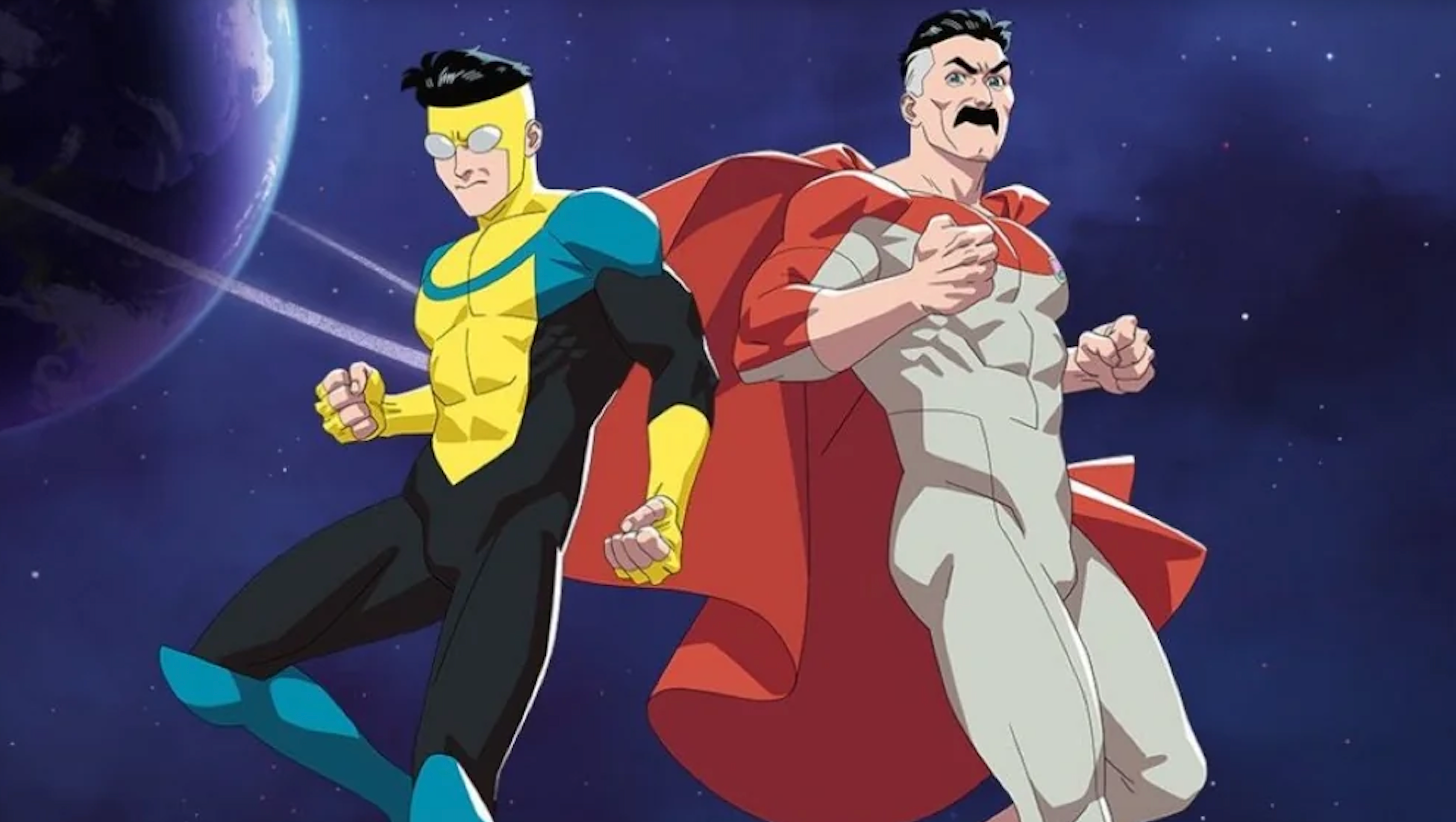
Invincible Season 4 has been a rollercoaster of vicious battles and emotionally charged character arcs based on the hit Image Comics series by Robert Kirkman, Cory Walker, and Ryan Ottley. While the show tends to be mostly faithful to the comics’ storylines, certain aspects of the characters and arcs have undergone significant divergences. Like any good adaptation, the Amazon Prime Video series takes what works in the comics and expands upon it, while also improving upon aspects that didn’t work well initially. And among all the characters adapted into the show, none was more well-received than the titular hero’s mother, Debbie Grayson.
Videos by ComicBook.com
Since the first season, Invincible has given Robert Kirkman the chance to expand on ideas and characters that he never got to work on in the original comic. From Rex and Rae’s relationship to the gender-swapping of Tech Jacket, the show gave Kirkman an opportunity few other creators have, especially with adaptations of their work. And from the beginning, Kirkman has been transforming Debbie, one of his most inconsequential characters, into the most important person in the entire series.
Debbie was the Invincible Comic’s Weakest Character
Invincible is one of the greatest comic book series of the 21st century, with its stellar, subversive writing and morally complex characters that make the reader question what it means to be a hero and that superpowers don’t necessarily allow for a well-lived life. However, while the conflict and drama between the assortment of heroes and villains are all incredibly compelling, one person was unfairly left behind: Debbie Grayson.
In the original Invincible comic series, Debbie Grayson, the wife of Nolan, aka Omni-Man and mother of Mark, aka Invincible, is practically a non-character. Despite her husband and son being the two most powerful and important people on Earth, Debbie herself was very passive and inconsequential. Very little time is ever devoted to expanding her individuality, and most of the time, she’s practically a background character who never really pushes the story forward in any meaningful way. The few times the comic did focus on her, like when she drunkenly accused Mark of driving Nolan away, didn’t have any lasting effects. Overall, Debbie was a purely reactionary character: always acting in response to other people’s actions and rarely given the chance to leave any lasting impressions on anyone.
Unfortunately, Debbie’s lack of characterization and agency negatively affected the overall story. A significant theme in the Invincible series is redemption and forgiveness, particularly whether Nolan could ever atone for his atrocities. Yet despite being married to Debbie for over twenty years and raising a son with her, Nolan and Debbie’s relationship isn’t given much focus before or after he tried to conquer the Earth. Even his infamous line about her being a “pet” isn’t given much weight in the original comic, since so little time was devoted to developing their relationship beforehand. And aside from spending most of her time drunk and sobbing, there is very little in-depth exploration of Debbie’s realization that her life with Nolan had been a lie.
Similarly, while Nolan’s redemption is, for the most part, handled well, his reconnection with Debbie felt rushed and unsatisfying. While at first Debbie seems like she’ll never forgive Nolan, by their second conversation, she almost immediately absolves him. And with that, she goes right back to being Nolan’s wife and leaves Earth to live with him. After everything Nolan did to her and the people she loves, he got off way too easily. In a sense, Debbie was treated as an award for Nolan’s good deeds fighting the Viltrumite Empire, rather than as a loved one who he had betrayed and needed to win back slowly. While none of this was intentional, Debbie was oversimplified and, as a result, downplayed the comic’s most important themes and character arcs.
The Prime Video Series Made Debbie Its Most Pivotal Character
The greatest success of the Invincible TV series is that it turned what was once the weakest element of the story into the glue that ties all the characters and themes together. Since Season 1, Kirkman and the rest of the show’s creators have meticulously built Debbie into her own person with a clear sense of direction and agency. And ironically, in a series full of larger-than-life superpowered beings, many people now find Debbie, the seemingly normal human, as their favorite character.
From the beginning, Debbie is given far more attention and a sense of identity to the point that she’s practically a deuteragonist. Unlike in the original comic, where she discovered Nolan’s true nature along with the rest of the world, Debbie deduces that Nolan murdered the Guardians of the Globe and even kicked him out of her house. And as the series goes on, we see first-hand Debbie struggle to put her life back together after learning that the man she loved saw her as a pet. Her road to recovery is incredibly moving and nuanced. Even her boyfriend Paul, who in the comic barely has a line, is treated as a real person and a sign of Debbie moving on with her life with someone she cares about.
Not only is Debbie a far more engaging character, but she also embodies the best of humanity and underscores the story’s themes. Firstly, throughout the series, Debbie’s unbreakable willpower and compassion make it clear that Mark inherited those traits, as well as his view on the sanctity of all life, from his mother. Secondly, through interactions shown both in the present and through flashbacks, Debbie’s wisdom, kindness, and assertiveness make it much more believable that Nolan would begin to second-guess his Viltrumite upbringing and culture. Lastly, the series drastically expands Debbie’s relationship with Nolan’s other son, Oliver, by focusing on how she stepped up to be his parent and taught him right from wrong.
Perhaps Debbie’s most important scene in the show is in Season 4, Episode 5, “Give Us a Moment,” when she first sees Nolan since he devastated Chicago and left Earth. In the episode, Debbie gives a far more brutal rejection of Nolan’s awkward apology. She makes it clear that she has no intention of ever forgiving him for the people he hurt and the life with her he ruined. It’s an incredibly powerful scene that shows how simply saying “sorry” or performing big acts of heroism are not enough to earn someone’s forgiveness; it takes time and real emotional effort. Kirkman uses the show to expand upon his original theme and add more nuanced layers to the conversation. It also makes Nolan’s struggle to reform much more realistic and meaningful.
Where once she was a one-dimensional side character, Debbie Grayson has transformed into the mentally strongest and most integral part of the Invincible series, whose words and actions have shaped Nolan, Mark, and Oliver into better people. With such a divergence from her original characterization, much of her future is left up in the air in terms of her relationship with Nolan and how she’ll impact upcoming events. Whatever the case may be, Debbie is bound to remain a central figure who will continue to elevate the series.
What do you think? Leave a Comment below and join the conversation in the ComicBook Forum!
Android app

Watch Free Movie and more
Advertisement
Related news
7 Most Powerful Sinister Six Members Who Were Not On the Original Team
Apr 12, 2026 - 01:15 PM
1 view
5 Most Visually Stunning Sci-Fi Movies of the Decade (So Far)
Apr 12, 2026 - 07:16 AM
1 view
Prime’s Invincible Adaptation Has Definitively Fixed the Comic’s Biggest Problem
Apr 12, 2026 - 07:16 AM
3 views
20 Years Ago, the Greatest Batman Run of the 21st Century Started
Apr 12, 2026 - 07:16 AM
2 views
7 Most Powerful X-Men Introduced Since 2000, Ranked
Apr 12, 2026 - 07:16 AM
3 views
46 Years Later, Scarlet Witch Has Proven One of Marvel’s Greatest Legends Wrong
Apr 12, 2026 - 07:16 AM
1 view
1 Year After Cancellation, Cult Classic Sci-Fi Series Gets Alternate Ending
Apr 12, 2026 - 07:16 AM
1 view
One of Marvel’s Greatest Divine Weapons Has Been Destroyed (& You’ll Never Guess Who Did It)
Apr 12, 2026 - 01:15 AM
6 views