
20 Years Ago, The Elder Scrolls Fixed a Huge Open-World Flaw, but It Didn’t Stick
2026-04-13 07:15:38
1 view
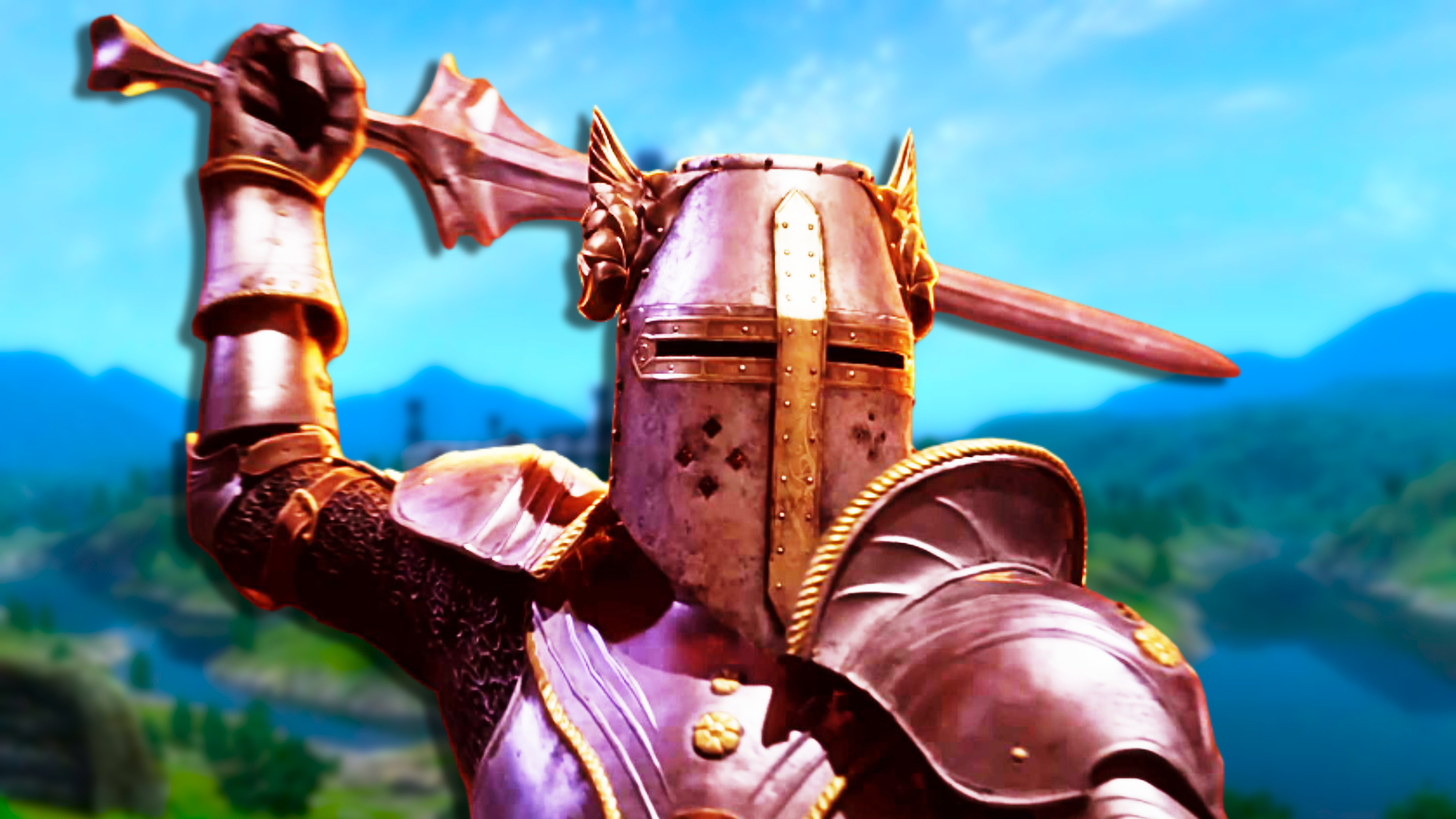
There are, inarguably, numerous flaws that still plague the open-world genre. Sure, the industry has ironed out some of its more frustrating kinks, and the abandoning of the tired Ubisoft formula has allowed the genre to not only mature but feel as wondrous as it did at its inception. However, seemingly, no matter how hard we try, some issues simply will not go away, either out of habit or, more bafflingly, choice. These can range from minor to major, but even the smallest of faults can contribute to the failings of an entire genre when coalesced.
Videos by ComicBook.com
Of course, it is easy to forgive the industry for these flaws, especially as many of them lack a solution at this current juncture. Even the best open-world games are going to have a few wrinkles, so it is best not to judge too harshly. Nothing is perfect, after all. However, one considerable problem with the open world genre was solved well over 20 years ago. Indeed, the solution is so obvious and so profoundly transformative that there is no reason for this problem to continue to exist. Yet, for some reason, minimaps, the scourge of the open world genre, persist, despite one of its most prolific series, The Elder Scrolls, abandoning it all those years ago.
Minimaps Are The Worst Thing To Happen To Open World Games
I am being a tad hyperbolic here, but minimaps, specifically within the open world genre, are truly awful. Of course, within a multiplayer competitive shooter or more linear experience in which your reliance on a minimap is minimal, but its existence is nevertheless beneficial, I understand the implementation of such a feature. In those specific instances, you’d only need to gaze down at it in rare and brief instances to get your bearings or figure out if there’s a hidden secret nearby. However, in open-world games, minimaps are at best a distraction, and, at worst, a temptation that’ll all but ruin exploration for you.
Recently, when playing the rather phenomenal Crimson Desert, I found myself a little lost. I figured it would be no problem, as I could merely retrace my steps and head back to the main path via the way I had come. Only, I had spent so much time looking at the minimap that I didn’t recognize my surroundings at all. I was so absorbed by the colorless, featureless, minimalist circle and not by the undeniably gorgeous scenery, stunningly handcrafted by a team of endlessly talented developers, that I literally had failed to pay attention to what was around me.
The problem doesn’t even inherently lie with the vehicle in which developers are displaying this information. It isn’t as if minimaps are too uninformative or even the opposite. Rather, it’s the placement of minimaps, something that cannot be avoided as a result of their size and shape. You always have to have it in one of the four available corners, and no matter which one it goes in (typically the bottom left or right), your gaze will naturally gravitate toward it. Because it’s in a corner, anything beyond it will be pushed into your peripheral vision, which usually doesn’t register as important to your brain and is thus rendered moot.
Of course, as the inclusion of minimaps has been prevalent for decades, we’ve been conditioned to rely upon them rather heavily. They’re an important feature of open-world games, even if I don’t personally like them. This means that, as players, we frequently turn to them in order to gauge our bearings, and developers rely on them to illustrate the direction to our next objective, rather than placing recognizable locations in the game world in order to help the player orient themselves. It leads to lazy game design and lazy game playing, both of which are, obviously, bad. Fortunately, Bethesda figured out a solution with its legendarily good The Elder Scrolls series. Unfortunately, apparently no one cared.
The Elder Scrolls Has The Perfect Minimap
The horizontal compass popularized by The Elder Scrolls V: Skyrim, but very potentially first introduced with The Elder Scrolls IV: Oblivion, is an infinitely better way of both conveying the player’s location without them needing to open the map and illustrating nearby objectives, locations, and enemies. Oblivion’s version was small and shoved into the bottom-hand corner, a solution that, while removing the distracting minimap, didn’t entirely solve the problem. Skyrim’s innovation was to both extend the compass and move it to the top of the screen.
This simple fix worked because the positioning was far more natural and easily accessible when simply staring straight ahead at the screen. Rather than shifting one’s eyeline to a bottom corner, players either already had the compass in their vision or merely had to glance up, a move that still kept the majority of relevant information (in this case, the beautiful world before you) in view. The compass also keeps things concise, removes clutter from the screen, and thus makes the experience all the more immersive. It is, in my opinion, the biggest contributing factor to The Elder Scrolls V: Skyrim being the most immersive open-world game ever crafted, at least before Kingdom Come: Deliverance was released.
Warhorse’s profoundly beautiful medieval open-world masterpiece is one of the few open-world games that actually adopts the horizontal compass as opposed to the minimap. As a result, for the reasons aforementioned, its gorgeous world is both constantly in view and more immersive. You really feel connected to it in a way that you can’t with The Witcher 3’s world, as mesmerisingly striking to behold as it is. Of course, the question is then why more developers don’t use the horizontal compass when it feels like a superior option?
The Minimap Is Here To Stay, For Now
Firstly, not everyone is like me and loves horizontal compasses. Shocker, I know. We have become conditioned to expect minimaps, and so they’re the conventional norm. Furthermore, minimaps simply convey the same information in a more detailed form, as topography and distance can be better illustrated visually rather than through numbers on a compass. As a result, especially in extremely vertical worlds like Crimson Desert’s, minimaps make more sense. Sure, they’re ultimately more distracting and detract from the beauty before you, but they’re easy to understand and commonplace, and thus feature in most open-world games.
However, while minimaps are the norm, there are more and more games utilizing the horizontal compass. There is, of course, the aforementioned Kingdom Come: Deliverance, in addition to the Horizon games, Fallout, Tainted Grail: The Fall of Avalon, Elden Ring, and Assassin’s Creed. Additionally, there are several games that have removed minimaps and compasses altogether, such as Ghost of Tsushima, Death Stranding, and Hell Is Us. While many developers do continue to rely on them, there are parts of the industry that are clearly interested in moving away from them in some form.
Obviously, the best solution is to have a hybrid option, one that caters to every kind of player. A contextual minimap that activates only when prompted would work, or the ability to choose between a minimap, a compass, or neither. Of course, these require significantly more development time, resources, and effort, which is something I suspect isn’t often devoted to something as largely unimportant as a minimap, especially as an accepted standard has already been established. However, as accessibility options and customizable HUDs become increasingly more prevalent in gaming, I’d wager that we may soon see developers approach something as ordinary as in-game navigation with a little more thought and perhaps attempt to overhaul or innovate upon it as The Elder Scrolls IV: Oblivion did 20 years ago.
What type of in-game navigation do you prefer? Leave a comment below and join the conversation now in the ComicBook Forum!
Android app

Watch Free Movie and more
Advertisement
Related news

6 Months Later, Poker Face’s Cancellation Still Hurts – Here’s Every Episode Ranked
Apr 13, 2026 - 07:15 AM
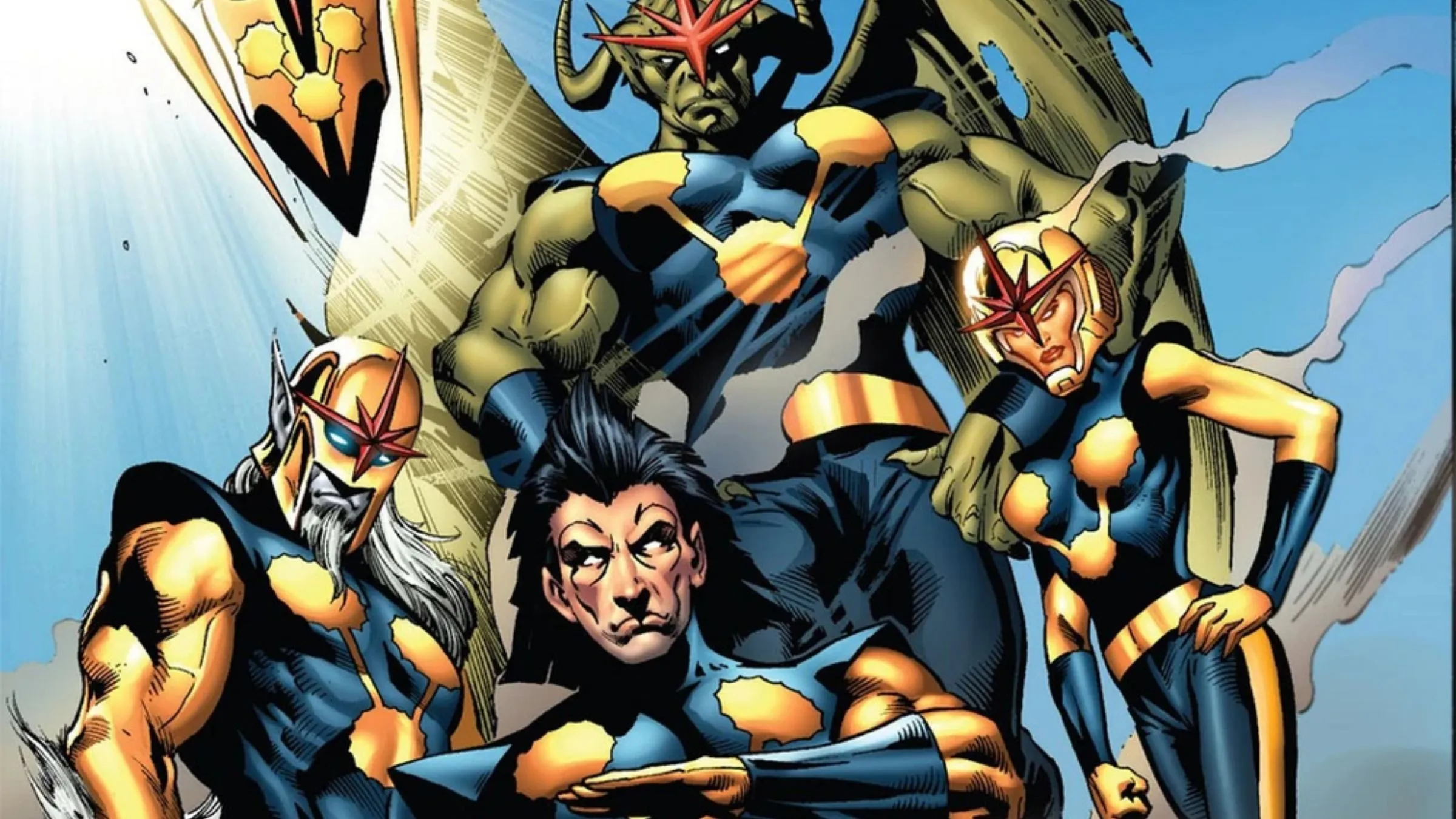
7 Greatest Nova Corps Members, Ranked By Power
Apr 13, 2026 - 07:15 AM
1 view

Major Crunchyroll Isekai Replaces Opening After Confirmed AI Use Controversy
Apr 13, 2026 - 07:15 AM

I’ve Been Waiting Years for This Promising Game (& It’s Getting an Anime)
Apr 13, 2026 - 07:15 AM
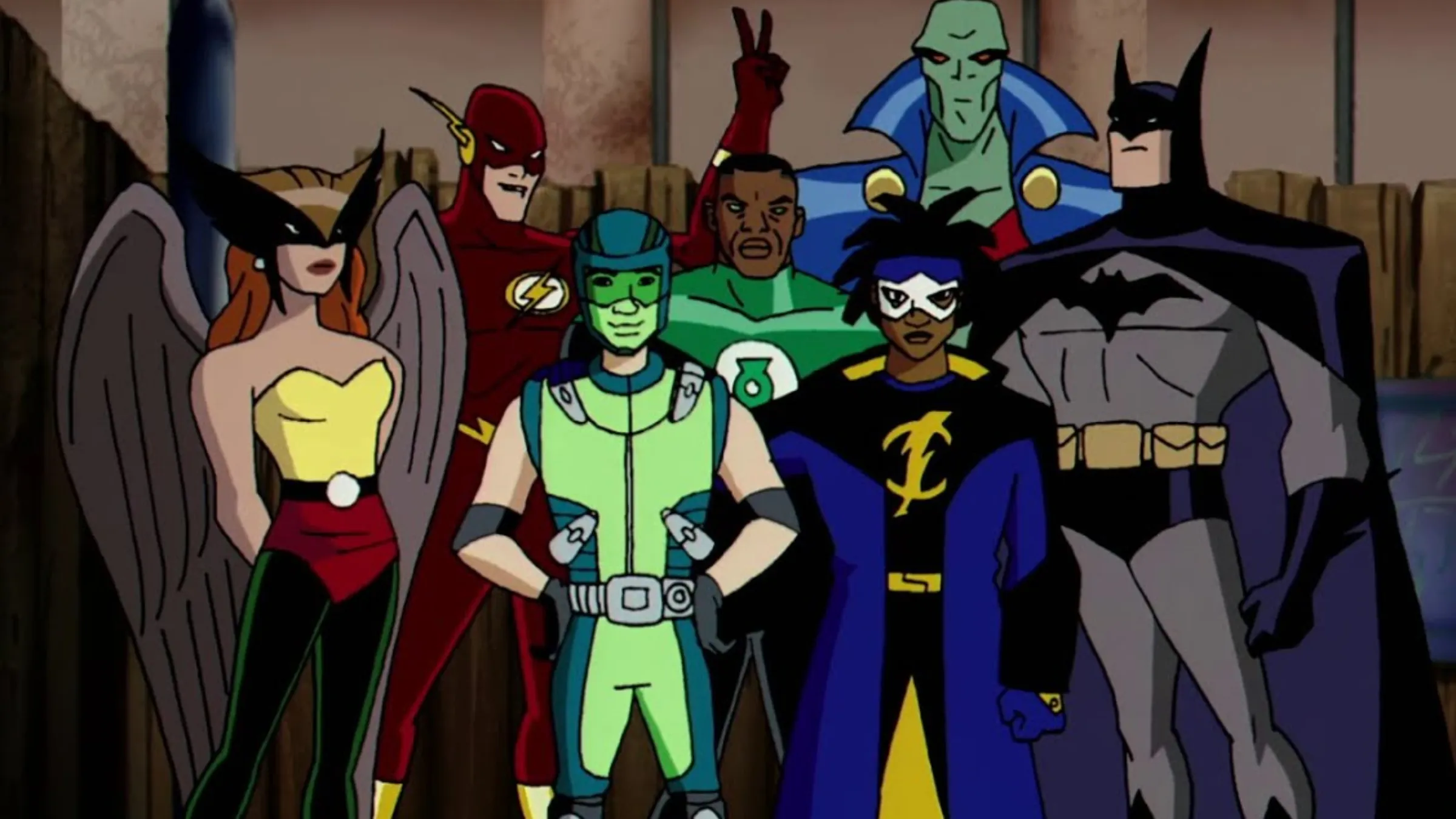
DC’s Secretly Best Animated Series to Return With Surprise Release This May
Apr 13, 2026 - 07:15 AM

Demon Slayer: Infinity Castle Finally Ends Theater Run After 9 Months (& Readies for Streaming Release)
Apr 13, 2026 - 07:15 AM

Goodnight Punpun Creator Set to Return With a Brand New Series in 2026
Apr 13, 2026 - 07:15 AM
20 Years Ago, The Elder Scrolls Fixed a Huge Open-World Flaw, but It Didn’t Stick
Apr 13, 2026 - 07:15 AM
1 view